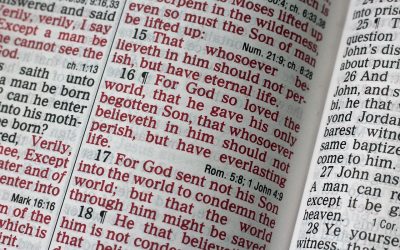

Now like chocolate and peanut butter, two great things which taste great together, two of my favorite things have come to together. Ministry-to-Children.com is giving away a package of five copies of the The Jesus Storybook Bible. Simply head on over to their forums and leave a brief post explaining why you love Jesus. Hurry up though! A winner will be selected on March 17, 2010, so go register for the prize today.
Welcome to a continuing series of tips on working with large groups of children. I hope that you will find these tips useful and be able to implement them in your dealings with large groups of kids. If you do, please leave a comment and let us know. For a complete list of posts in this series, please see the index page. So, without further introduction, here is today’s installment.
Another great idea for keeping kids engaged in the large group lesson is to break up your lesson with fun and relevant games. Games are great for getting kids involved and helping them to remember what you’re trying to teach. There are a ton of great books and websites out there that can help you find a game related to the lesson you are teaching that weekend. I posted several links to great game sites in my post titled Best of the Best – Children’s Ministry Internet Resources.
One option which I have found kids to be particularly receptive to is to incorporate a game show format in the middle of your lesson. Set up a stage (it doesn’t have to be anything fancy), cue up the sound effects and put on your best game show announcer voice. If you have a polyester jacket – even better! In teaching kids about wisdom, we played “Who’s the Wise Guy,” a jeopardy type game with just a twist of The Price Is Right mixed in. With the rise in reality TV and game shows that kids are exposed to, there are plenty of formats that you can modify for use in your classroom. I haven’t worked out the specifics yet, but one of these days, I’d liked to play “Wheel of Prayer” to teach the kids about salvation or “Deal or No Deal” to teach the kids about sin and grace. As a brief aside, I think “Win, Lose or Draw” has infinite possibilities in a large group teaching.
Board games can be a great idea as well. While most large group formats don’t allow the time for a full-on game of Monopoly, how about using Jenga to teach kids about cooperation or as part of an object lesson on Hezekiah rebuilding the wall around Jerusalem. How about Hungry Hungry Hippo when teaching about the feeding of the 5,000. All you need is a board game and a good imagination.
Finally, don’t be afraid to invent your own games. Just because no one has ever thought of it doesn’t mean it won’t work! Modifying well known games like Duck-Duck-Goose, Red Light-Green Light or Rock, Paper, Scissors to fit with your lesson is a great idea. Let your creativity flow and make up games. For Awana this Christmas, I came up with a game where the kids were going to be divided into groups and come up with a short Christmas show based on the lyrics of a Christmas carol they selected. I was going to have the leaders judge each show based on set of predetermined criteria and name a winner. Unfortunately, we ran out of time and didn’t get to play the game, but I’m throwing it in my file for next year, or I may modify it to use nursery rhymes in the spring.
Which brings me to my final point – keep a file. Find good books, search the internet, check on-line forums, but when you find a good game, print it out and throw it in a file. You never know when you might need it.
Welcome to a continuing series of tips on working with large groups of children. I hope that you will find these tips useful and be able to implement them in your dealings with large groups of kids. If you do, please leave a comment and let us know. For a complete list of posts in this series, please see the index page. So, without further introduction, here is today’s installment.
If you teach a large group and are not involved in small group time with your kids, you miss out on the opportunity to bond with the kids at a one-on-one level. In my mind, this was the one major disadvantage to switching from small group leader to large group teacher. Accordingly, it is critical that you take advantage of any opportunity you can find to spend some one-on-one time with them. Join the kids for worship and sing and dance with them. Even if you can’t lead a small group because of your large group responsibilities, make some time to sit down with the kids during their small group time every once in a while. This gives you a chance to engage them in conversation and find out what’s going on in their lives. Go to other kid-centered events at the church and engage the kids there. Make sure you’re the one that greats them when they show up at your classroom and that you are the one that says goodbye as they’re leaving when it’s over. Incorporate them into your large group lesson and speak directly to them during the teaching where you can. Just because your main focus is on the large group teaching doesn’t mean that you can’t spend some one-on-one time with the kids. If you can build some personal relationships with the kids, you will have a much more effective large group time as well.
Welcome to a continuing series of tips on working with large groups of children. I hope that you will find these tips useful and be able to implement them in your dealings with large groups of kids. If you do, please leave a comment and let us know. For a complete list of posts in this series, please see the index page. So, without further introduction, here is today’s installment.
This won’t be a surprise to anyone reading this article, but most kids get really bored really quickly. One way to keep kids engaged in what you are trying to teach them is to vary your vocal delivery.
If you’re telling a story and approaching the climax, let that come through in your delivery. Heighten your pace and the tone as you explain how the ship the disciples were in was tossed to and fro in the storm. Speak a little bit louder when you explain about the large crowds of people following Jesus. Shout when you’re telling the story of Jericho’s walls falling down.
On the flip side, a great way to draw kids back in who may have disengaged from your story is to lower your voice and lower your tone. Force them to strain just a little to hear you. When you are talking about Jesus hanging on the cross, speak in hushed tones. When you teach about the Garden of Gethsemane, let the anguish come through in your voice. Mixing up your vocal delivery will help to keep kids engaged. Let your inner thespian shine through!
Starting today, a great new resources is available for pre-order on Amazon.com. The book, call Collaborate: Family + Church brings together Michael Chanley and 34 other writers from the field of Children’s Ministry to share their views on connecting parents and the church in the spiritual development of children. The noted list of authors includes the “Who’s who” of Children’s Ministry today including:
I was familiar with many of these contributors prior to this book, and I have linked their blogs / pages in the list above where I could find. This group brings a wealth of knowledge on the subject together in one place which I think is unparalleled in any prior publication. I can not wait to get my copy and learn from them as well as the other contributors!
Several others have posted articles regarding this upcoming book. Check out the following articles from:
A Blog Tour is coming up for this book sometime next month. I am excited to have been selected to participate in that review. In the interest of full disclosure, I will be provided a copy of the book as part of that process. I have not yet received the book, and I am posting this article because I am genuinely excited about this coming resource and hope all those involved in children’s ministry will check it out.
The following is a video about the book:
For more information, check out Collaborate’s Facebook page.
A couple of months ago, I started the Wordle challenge. Wordle.net is a site that allows you to create word pictures of your blog / site based on the frequency with which you use certain words. Each month I run Dad in the Middle through Wordle to get a visual image of what the blog has been focused on recently. Previous Wordle graphics can be found at the bottom of this post.
Here is my Wordle.net for February 2010 created on February 28, 2010:
I was glad to “kids” and “Bible” featured this month as the combination of those two is one of my passions. Many of the entries are influenced by the last post of the month which was a review of Phil Vischer’s new venture called What’s In the Bible. As much as I respect Phil, I attribute the timing of the post to the fact that Phil is as large as God in this Wordle. It was interesting to find out that capitalization counts in Worlde. I wonder how big “ministry” would have been if I had used consistent capitalization. So, there you have it, the February 2010 edition of the Wordle challenge. Let me know what you think!
If you have a blog, I challenge you to run Wordle.net on it and see where your focus is! I was excited this past month to find at least one site, Effective Children’s Ministry, that took the Wordle challenge. Here is there second monthly Wordle for the month of February. If you do take the challenge, post it on your site, and leave a comment here so we can all come see your Wordle!
R U Smarter than a Fly? is a unique series that looks at real Biblical stories through the fictional eyes of a fly. They are creative, entertaining and enlightening. Each Saturday this month we will feature on in the series of these shorts. In this episode – the story of the blind man healed by Jesus:
Welcome to a continuing series of tips on working with large groups of children. I hope that you will find these tips useful and be able to implement them in your dealings with large groups of kids. If you do, please leave a comment and let us know. For a complete list of posts in this series, please see the index page. So, without further introduction, here is today’s installment.
This idea was new for me when I started teaching and not one I was particularly comfortable with. I am not much of an actor, and I never envisioned myself “doing characters,” but I like to hear kids laugh so I gave it a try. Introverted though I am, I stepped into my very first character role in front of a room full of five and six year olds the very first weekend I taught the large group portion of our curriculum. That morning, Professor Knows-A-Lot was born. Even thought he is not all that creative in the scheme of things, he has become a recurring character in our classroom to the point where the kids frequently ask when he’s coming back. The kids really stay engaged when he shows up, even if it is just to point out how much he looks like me! There is actually an on-going debate in our classroom as to whether Professor Knows-A-Lot and I are actually the same person. I think the photo I took in from the family picnic proved that we are not! Nonetheless, with a simple wig and a really bad English accent, the kids have a “guest” they look forward to seeing every month or two, and they get a chance to listen to someone other than just me. Don’t be afraid to step out of your own skin and into someone else’s.
Welcome to a continuing series of tips on working with large groups of children. I hope that you will find these tips useful and be able to implement them in your dealings with large groups of kids. If you do, please leave a comment and let us know. For a complete list of posts in this series, please see the index page. So, without further introduction, here is today’s installment.
Kids do not naturally have long attention spans. I was at a movie with a toddler over Christmas vacation, and this point was drive home for me in a very real way. Even Alvin and the Chipmunks couldn’t keep that child engaged. After about twenty minutes, she was all over that theater until her mother finally had to take her out into the lobby. If you’ve ever been seated behind a four year old on a cross-country flight, then you’ve likely experience this truth with all five of your senses.
The culture we live in has exasperated this problem by catering to the short attention spans of kids through the entertainment and games it offers to kids. These influences have had the collective effective of reducing attention spans even more (as an aside, this problem isn’t limited to kids). One of my mantras when it comes to working with kids is that we must make sure not to underestimate them. That said, it is still a good idea to break up your lesson into smaller components to keep the kids’ attention. Put your musical worship segment right in the middle of the lesson to give kids a chance to get up on their feet and worship God. Tell your story and then show a video to reinforce the point. Use announcements to give the kids a short break from the teaching. Have the kids come up and act out the story to get them moving around. Play a little game in the middle of your lesson to reinforce the main point. Whatever you can think of, break the lesson into clear and distinct segments so that the kids don’t feel like they are sitting through one long teaching. Trust me, you’ll enjoy the lesson more that way too!
Welcome to a continuing series of tips on working with large groups of children. I hope that you will find these tips useful and be able to implement them in your dealings with large groups of kids. If you do, please leave a comment and let us know. For a complete list of posts in this series, please see the index page. So, without further introduction, here is today’s installment.
When I agreed to take over the large group teaching segment of our curriculum at my church, the first thing I did was I started to read. I looked for books with tips and helpful advice on teaching and presenting and children’s ministry in general so that I could do the best job possible. As I was browsing at my local Christian Book Store, I came across a book that looked like it would be really helpful. I started to browse through it a little bit at the store, and I came to a chapter with some interesting advice. The author’s very first piece of advice was that you should memorize your lesson every week. Well, I promptly put that book down and found something else. How was I going to manage to memorize a lesson every week and take care of everything else in my life? It wasn’t advice I cared for, so I did what most of us would do in the situation – I ignored it!
A couple of weeks later, I found myself back in that same store looking for more books on teaching and Children’s Ministry. I picked up the book again and browsed some of the other chapters. It seemed to have enough good stuff in it to make it worthwhile, so I decided to overlook the whole “you should memorize your lesson” thing and go ahead and buy the book. I’m glad I did. The book was chocked full of great advice, some which I have since used and is now incorporated into this series, but I found myself most convicted by the idea of memorizing the lesson. As I frequently do when I am convicted about something and don’t really care for it, I chalked it all up to indigestion and continued reading. As the time for me to start teaching the class grew closer and closer, the thought of memorizing the lesson continued to swirl around and around in my head. Finally, I decided I would give it a shot. Well, to make a long story a little bit shorter, it worked out pretty well. I found that by memorizing the lesson, it allowed me to freedom to adapt on the fly a whole lot easier and to deliver a better message.
So, I found myself somewhere in the middle. Here’s is the procedure I go through for each lesson. I start out with detailed script for each lesson which I eventually reduce to a very very detailed outline. That detailed outline is later reduced to a higher level outline as I continue to commit the lesson to memory. Oftentimes, that higher level outline is then further reduced to a listing of key points. In the end, I do take my abbreviated outline with me (just in case), but most of the time I try to deliver the message from memory, and I just check my notes occasionally to make sure I haven’t missed anything. It isn’t quite as memorized as I might like, but it does the trick for me.
So, what are the benefits of memorizing your lesson? Well, for starters it gives you the ability to adapt. When you’re exerting all of your energy trying to remember what it was you wanted to say, you can’t concentrate on what is and isn’t working in the lesson and make on-the-fly adjustments. Secondly, if the kids see that you can’t haven’t even bothered to take the time to remember your lesson, what incentive do they have to try to remember it? When you’ve taken the time to memorize your lesson, it sends the message to the kids that this is something important that you’re talking about, and they should listen up. Some people will argue, “I just try to remember the high points, and that works well enough for me.” To that, I would argue that you’re entire lesson should be high points. If it’s not, if there are “throw away” points such that it doesn’t really matter whether or not you remember them, you have bigger issues than just memorization.
Ok, now that you’ve reached the end of this section, go back and memorize this post as practice! Just kidding, go start memorizing your lesson instead!